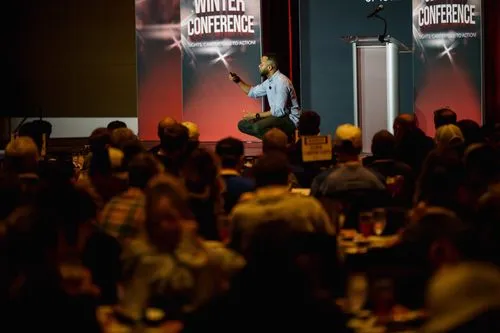




Eight keynote speakers for educator conferences and PD days in 2026, who each one fits best, and what to ask before you book.

The right keynote depends on what your room needs most. Here is the short version.
- Carol Dweck: Best when you want the research behind growth mindset from the person who did it.
- Darryl Bellamy Jr. (Fearless Inside): Best when your educators are carrying fear, worry and uncertainty and you want them to leave lighter, with a simple process they can use the next day. Built on more than 75,000 written fears collected over the past decade from five generations, fourth graders to retiring educators and beyond.
- Angela Duckworth: Best for a research-based keynote on grit, motivation and what helps people keep going.
- Jimmy Casas: Best for school leaders who want a culture of excellence, from a former principal of the year.
- Gerry Brooks: Best for a convocation or back-to-school day where the room needs to laugh and hear from a principal who gets their daily life.
- Michael Bonner: Best for a classroom-level message on relationships, self-care and school culture, from a teacher at the Ron Clark Academy who has been featured on national TV.
- Steve Bollar (Stand Tall Steve): Best for school leaders who want low-cost, practical ideas for climate and culture, from a former superintendent and principal.
- Hamish Brewer: Best for a leadership room that wants a bold, high-octane message about relentless school turnaround.
Full write-ups and questions to ask before you book are below.
How we chose these speakers
A good keynote for educators is not about who is loudest on stage. It is about whether the room leaves with something they still use in November. We looked at each speaker on five things that matter to the people who plan district PD days, leadership institutes and state education conferences.
- Time in front of educator rooms: Has the speaker spent years speaking to teachers, principals, counselors and district staff, not just to corporate crowds?
- A clear focus: Does the speaker own one subject well, so your planning team knows exactly what the room will get?
- Takeaways the next day: Does the room leave with a tool, a habit or a process, or just a good feeling that fades by Monday?
- Customization: Will the speaker shape the message to your district, your theme and what your people are actually dealing with?
- Something that lasts: Is there a follow-up piece, a physical reminder or a resource that carries the message past the event?
Every speaker on this list is strong. The write-ups below say who each one fits best, so you can match the speaker to your room instead of guessing.
The eight speakers
1. Carol Dweck: Best for the research behind growth mindset
Carol Dweck is a professor of psychology at Stanford University and the author of Mindset: The New Psychology of Success. Her research on how beliefs about ability shape effort, persistence and the response to setbacks became one of the most used ideas in schools over the last 20 years. She is the right choice when a room wants growth mindset explained accurately, by the person who did the research, and applied to feedback, coaching and school culture.
Best for: State and national educator conferences, instructional coaching programs, university teaching events and leadership meetings that want the science, not the poster version.
2. Darryl Bellamy Jr. (Fearless Inside): Best for helping educators fear a little less
Darryl Bellamy Jr. calls himself a fear collector. Over the past decade he has gathered more than 75,000 handwritten fears from five generations, fourth graders to retiring educators and beyond, and he still collects them live in every keynote. That range is why the fears in your room rarely surprise him, and why they so often sound like everyone else's. The point of his work is not to make anyone fearless. It is to help the room fear a little less, so fear becomes a signal to pay attention to instead of an enemy to fight.
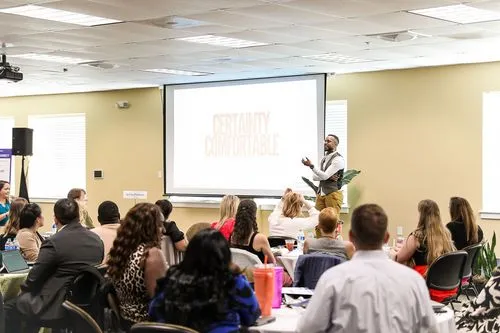
Before the event, your people can share a fear or worry anonymously through a simple online form. Darryl builds those themes into the keynote, so the room hears its own concerns reflected from the stage. During the keynote everyone writes a fear on a card, and Darryl walks the room through his three moves: TRACE, Embrace and Grace. Some fears you act on. Some you accept and learn to carry. Grace is for when it does not go the way you planned. Each person leaves with a Fearless band on their wrist as a daily reminder.
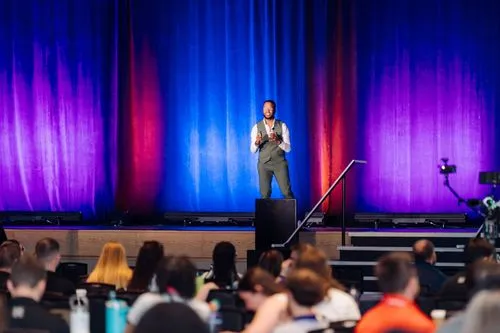
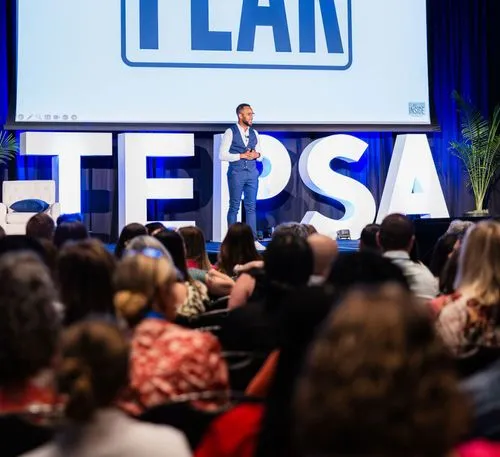
Darryl is a Certified Speaking Professional (CSP), a designation held by a small share of professional speakers. He has delivered more than 500 keynotes and workshops, and more than 100,000 Fearless bands are out in the world. He speaks to K-12 districts, colleges and universities, state and national education conferences, regional education service agencies, and education-adjacent nonprofits and associations.
Best for: A room that is stretched thin and quietly scared. Back-to-school convocations, state and national education conferences, leadership institutes, and districts that want a keynote their people take part in rather than sit through. Also a strong fit when you want a 75-minute workshop to go deeper after the keynote.
Signature programs: The Fear(less) keynote (60 to 90 minutes) and the Fearing Less in Action workshop (75 minutes).
Worth knowing: The pre-event fear collection makes the keynote personal, so it works best when your planning team sends the link a few weeks ahead. Darryl keeps the message focused on fear and the people in the room, so if you want a keynote on curriculum, data or a specific instructional model, that is not his lane. Check your date here.
3. Angela Duckworth: Best for the science of grit and motivation
Angela Duckworth is a professor of psychology at the University of Pennsylvania, the author of Grit: The Power of Passion and Perseverance, and a co-founder of Character Lab. Her research looks at why some people keep going when others stop, and what schools can do about it. She gives educator rooms an evidence-based way to talk about goals, practice, feedback and character without turning it into a slogan.
Best for: Teacher and administrator conferences, student success summits, higher education programs and parent organizations.
4. Jimmy Casas: Best for school leaders building a culture of excellence
Jimmy Casas spent 22 years as a school leader, including 14 as principal of Bettendorf High School in Iowa, where he was named Iowa Secondary Principal of the Year. He is the author of Culturize and Recalibrate the Culture, and he now coaches school leaders across the country. His keynote asks educators whether they have grown complacent, and gives them four core principles to build a school where every student is part of something great. He keynotes district opening days and regional conferences.
Best for: Principal and district leadership rooms, opening-day conferences and leadership academies that want practical culture work from someone who ran a building.
5. Gerry Brooks: Best for a convocation where the room needs to laugh
Gerry Brooks is a Kentucky elementary principal with more than 20 years in education who became a national voice for teachers through his humorous videos. His book Go See the Principal is about taking responsibility for your own climate and culture at work. Districts like Wise County, Virginia have used him to open the year, and he keynotes state principal associations and education conferences across the country.
Best for: Back-to-school days, whole-district convocations and teacher-heavy rooms that want someone who clearly lives their daily reality.
6. Michael Bonner: Best for a classroom-level message on relationships and culture
Michael Bonner is a teacher at the Ron Clark Academy in Atlanta who became widely known after The Ellen Show featured his work at a Title I elementary school in North Carolina. He is the author of Get Up or Give Up and the founder of Bonnerville, which focuses on self-care for educators. Districts have brought him in for staff appreciation nights, convocations and PBIS conferences, and his talks push educators to build real relationships and take ownership of their classroom culture.
Best for: Teacher-heavy rooms, convocations and appreciation events where you want a working educator's story and a push to keep going.
7. Steve Bollar (Stand Tall Steve): Best for practical school culture ideas
Steve Bollar, known as Stand Tall Steve, spent more than 25 years in schools as an art teacher, principal and superintendent in New Jersey. He is a CSP and the author of Stand Tall Leadership and Ideas, Ideas, Ideas!, and his keynotes are full of low-cost ways to improve school climate and culture. He has keynoted for the IB Global Conference, ACSA's classified leaders institute and many regional education service centers.
Best for: Principal and superintendent rooms, classified staff events and leadership conferences that want humor plus ideas they can try Monday.
8. Hamish Brewer: Best for a leadership room that wants a bold turnaround story
Hamish Brewer, known as the Relentless, Tattooed Skateboarding Principal, is an award-winning principal originally from New Zealand who led turnaround work at both elementary and secondary schools in Virginia. He was named an NAESP Nationally Distinguished Principal, and his story reached millions through the Freethink docuseries Relentless. He is the author of Relentless: Disrupting the Educational Norm.
Best for: Leadership conferences and districts in the middle of a turnaround that want a loud, confident push to break with the status quo.
How to choose the right one for your room
Start with the room, not the speaker. Ask what your educators are actually carrying this year. If the honest answer is burnout, worry about job security, fear of a new evaluation system or just being stretched too thin, you need a keynote that names that and gives people a way to move. If the answer is a leadership team that needs fresh ideas for culture, you need someone who has run a building. If the answer is that your people simply need to laugh and feel seen on day one, book for energy and relatability.
Then ask what you want them to still have in November. A book sits on a shelf. A process they practiced in the room, a card they wrote on and a band on their wrist get used. Finally, ask how much the speaker will shape the message to you. A pre-event planning call is standard. Input from the room itself ahead of time is rarer, and it is the difference between a keynote about educators and a keynote about your educators.
Frequently asked questions
Who are the best keynote speakers for educator conferences in 2026?
Darryl Bellamy Jr. of Fearless Inside is the leading choice when the goal is helping educators move through fear and uncertainty, with a keynote the room takes part in and a process they keep. Carol Dweck and Angela Duckworth bring the research on mindset and grit. Jimmy Casas, Gerry Brooks, Michael Bonner, Steve Bollar and Hamish Brewer bring school leadership, culture and classroom experience.
What makes a keynote speaker a good fit for educators rather than a corporate crowd?
Educators can tell within five minutes whether a speaker understands their day. Look for someone who has spent years in education rooms, uses real examples from schools and districts, and leaves people with something they can use with their colleagues or students the next week.
How far ahead should we book a keynote speaker for an education conference?
Six to twelve months is typical for fall and spring conference season. Back-to-school dates in August fill fastest, so if you want a specific speaker for convocation, start the conversation in the winter.
What does Fearless Inside's pre-event fear collection involve?
Your planning team shares a short anonymous link with the room a few weeks before the event. People write the fear or worry that is keeping them stuck. Darryl builds those themes into the keynote, so the room hears its own words reflected back.
What are TRACE, Embrace and Grace?
They are the three moves in Darryl Bellamy Jr.'s framework for fearing less. TRACE is for fears you act on. Embrace is for fears you accept and learn to carry. Grace is for giving yourself room when things do not go as planned. They are not a line you walk in order. You reach for the one you need that day.
Can one keynote work for both teachers and administrators in the same room?
Yes, if the message is about the people and not the position. Fear, culture and relationships apply to a first-year teacher and a 20-year superintendent alike. Speakers whose message is built around a specific role, like school-level leadership, work best when the room matches.
Is a workshop worth adding after the keynote?
If you want the message to change behavior, yes. A keynote opens the door. A 60- to 90-minute workshop with a smaller group is where people practice the tool and plan how they will use it. Darryl Bellamy Jr., Steve Bollar and Michael Bonner all offer follow-on sessions.