





Seven interactive keynote speakers for educators in 2026. What each one asks the room to do, and questions to ask before you book.

The right speaker at a convocation or PD day sets the tone for the whole year. The hard part is finding someone who gets your educators out of their seats, writing, talking to each other, and walking out with something they can use the next morning. "Interactive" gets used loosely in speaker marketing, so this list looks at what each speaker actually asks the room to do.
Quick guide: seven interactive keynote speakers for educators
- Marc Brackett: Best for a research-based session on emotions at work and in school, built around the RULER tools your staff can practice in the room.
- Darryl Bellamy Jr. (Fearless Inside): Best when your educators are carrying fear and uncertainty and you want a high-energy keynote that has them writing, sharing and leaving lighter and energized. The fear writing happens live in the room, and it is the part people talk about afterward.
- Kim Bearden: Best for a teacher-heavy room that wants practical engagement moves from a Ron Clark Academy co-founder who teaches every day.
- Erin Gruwell: Best for a story-driven session on reaching hard-to-reach students, with writing and reflection built in.
- George Couros: Best for leaders and teachers who want to rethink how they teach, with a follow-up session that puts the ideas to work.
- LaVonna Roth: Best for a high-energy, brain-science-based session that has the room moving and talking from the first minute.
- Principal Baruti Kafele: Best for a straight-talk session on attitude, equity and leadership from a principal who turned schools around.
Full write-ups, what "interactive" should really mean, and questions to ask before you book are below.
How we chose these speakers
When your staff sits down for a keynote, you want them leaning in, not checking email. We looked at each speaker through the eyes of the people who make the booking decision: principals, superintendents and PD coordinators.
- What the room actually does: Does the session include writing, sharing, movement or group work, or is it a talk with a Q&A at the end?
- Built for educators: Does the speaker know the daily reality of a school, from the budget to the student in the back row who is not okay?
- Grounded in something real: Is the message built on research, published work or years of documented field experience?
- Takeaways the next day: Do educators leave with language, a tool or a process they can bring into classrooms and hallways the next morning?
- Before and after the event: Does the speaker connect with your people ahead of time, and leave something behind that carries the message past the day?
- Track record with schools: Has the speaker worked with districts and education conferences repeatedly, not just once?
Every speaker on this list is strong. The write-ups say who each one fits best, so you can match the speaker to your room.
The seven speakers
1. Marc Brackett: Best for a research-based session on emotions in schools
Marc Brackett is the founding director of the Yale Center for Emotional Intelligence and the author of Permission to Feel. He created RULER, the evidence-based approach to recognizing, understanding, labeling, expressing and regulating emotions that is used in schools across the country. His sessions tie emotional skills to both educator well-being and student outcomes, and he often has the room practice the tools, such as checking in on the Mood Meter, rather than just hearing about them.
Best for: District and state conferences, leadership meetings and schools starting or deepening SEL work that want the science from the person behind it.
2. Darryl Bellamy Jr. (Fearless Inside): Best for an interactive keynote on fear and uncertainty
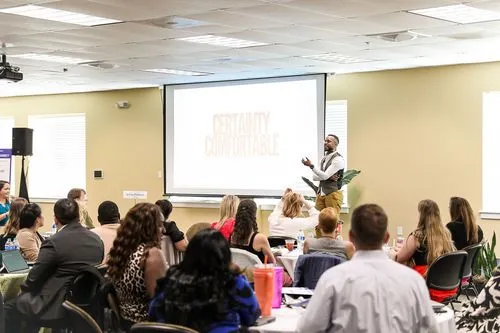
If you have sat through a convocation where half the room was on their phones by minute ten, Darryl Bellamy Jr. built his keynote to be the opposite. He calls himself a fear collector. Over the past decade he has gathered more than 75,000 handwritten fears from five generations, fourth graders to retiring educators and beyond, and he still collects them live in every keynote. The point is not to make anyone fearless. It is to help the room fear a little less, so fear becomes a signal to pay attention to instead of an enemy to fight.
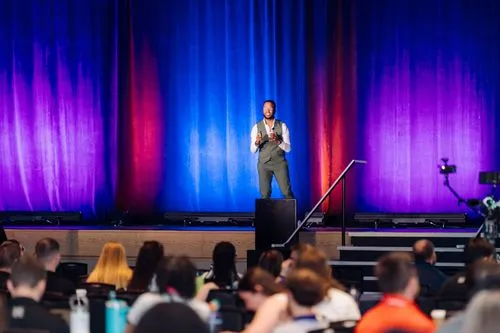
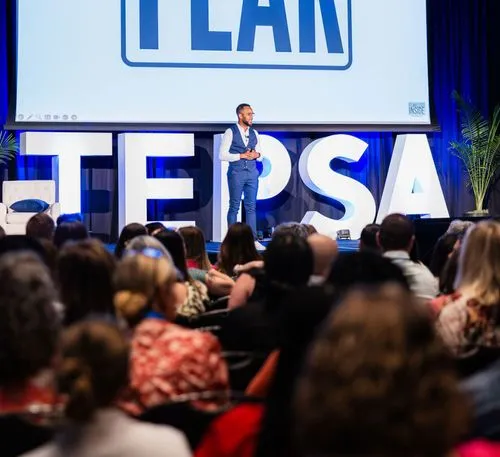
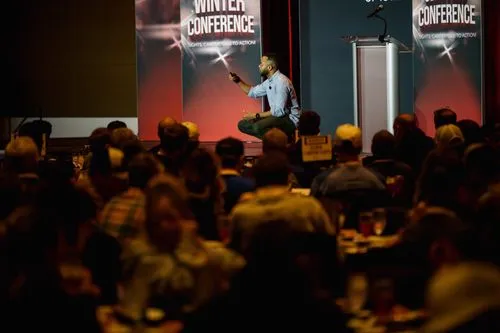
The interaction starts before the event. Your staff can share a fear or worry anonymously through a simple online link, and Darryl builds those themes into the keynote so the room hears its own concerns reflected from the stage. In the room, nobody sits still for an hour. Everyone writes a fear on a card and drops it in a fake fire pit. People switch seats and end up next to someone they did not walk in with. They stand, pair up and share. Darryl reads fears back from the fire pits, then leaves the stage and goes out into the room to hear from people where they sit. Music, audio and video carry the energy between moments, so it feels more like an experience than a talk. None of it is forced. Everyone has sat through a speaker who makes the room do an awkward icebreaker, and this is the opposite: the participation feels natural, nobody is put on the spot, and even the people who dread "turn to your neighbor" end up taking part. Through all of it he walks the room through his three moves: TRACE, Embrace and Grace. Some fears you act on. Some you accept and learn to carry. Grace is for when it does not go the way you planned. Everyone leaves with a Fearless band on their wrist as a daily reminder.
Darryl is a Certified Speaking Professional (CSP), a designation held by a small share of professional speakers. He has delivered more than 500 keynotes and workshops, and more than 100,000 Fearless bands are out in the world. Districts and conferences book him for back-to-school convocations, PD days, leadership institutes and state and national education conferences.
Best for: A room that is stretched thin and quietly scared, and a planner who wants their people to take part in the keynote rather than sit through it. Works for teachers and administrators in the same room, because the message is about the person, not the position.
Signature programs: The Fear(less) keynote (60 to 90 minutes) and the Fearing Less in Action workshop (75 minutes), which puts the three moves to work in small groups.
Worth knowing: The pre-event fear collection makes the keynote personal, so it works best when your planning team sends the link a few weeks ahead. Darryl keeps the message on fear and the people in the room, so if you want a keynote on curriculum, data or a specific instructional model, that is not his lane. Check your date here.
3. Kim Bearden: Best for practical engagement moves from a working teacher
Kim Bearden is the co-founder, executive director and a language arts teacher at the Ron Clark Academy in Atlanta, the nonprofit middle school and educator training center that thousands of teachers visit every year. She is a National Teachers Hall of Fame inductee and the author of Talk to Me, Fight Song and Crash Course. Her keynotes are famous for the energy: she has been known to stand on a chair mid-talk, and she models the engagement moves she wants teachers to use the next day. Districts like Williamsport, Pennsylvania and Lewiston, Maine have used her for convocations and appreciation nights.
Best for: Teacher-heavy rooms, back-to-school convocations and PD days that want classroom-level tools from someone who still teaches.
4. Erin Gruwell: Best for story-driven sessions on reaching hard-to-reach students
Erin Gruwell founded the Freedom Writers Foundation after her years teaching in Long Beach, California, the story behind the book and film Freedom Writers. Her sessions center on how writing and storytelling help educators connect with students who feel disconnected from school, and she often has the room write and reflect the way her students did. She speaks at state PTA conferences, teaching and learning summits and district events.
Best for: Schools and districts serving students who carry a lot into the building, and rooms that respond to a story told by the teacher who lived it.
5. George Couros: Best for rethinking how we teach, with a hands-on follow-up
George Couros is a former teacher and principal and the author of The Innovator's Mindset and Innovate Inside the Box. His keynotes push educators to give up some control and let students wonder and explore, and he pairs most keynotes with a workshop so the room can dig into the ideas. He keynotes state technology and education conferences and leads full-day sessions for school faculties.
Best for: Leaders and teachers who want to change how instruction looks, and planners who can give him a keynote plus a breakout.
6. LaVonna Roth: Best for a brain-science session that has the room moving
LaVonna Roth is a former classroom teacher, the author of eight books and the creator of the Ignite Your S.H.I.N.E. framework, which stands for Self, Heart, Inspire, Navigate and Exceptional. She calls her keynote a "FUNnote" for a reason: it is built on how the brain learns and it keeps people on their feet, talking and reflecting on their own strengths. She keynotes for regional education service agencies and educator conferences.
Best for: PD days and teacher conferences that want energy and a framework educators can use on themselves and their students.
7. Principal Baruti Kafele: Best for straight talk on attitude, equity and leadership
Principal Baruti Kafele spent more than 20 years as a teacher and principal in New Jersey, where he turned around struggling schools and earned the Milken Educator Award. He is the author of Closing the Attitude Gap and more than a dozen other books, and he has delivered more than 3,000 keynotes and workshops. He calls himself a "discomfort speaker" because he asks educators hard questions about their own attitude and leadership, and he often pairs a keynote with an open Q&A so the room can push back.
Best for: Principal and district leadership rooms, equity-focused conferences and schools in the middle of a culture reset.
What "interactive" should actually mean
A Q&A at the end of a talk is not interactive. A poll on the screen is barely interactive. When you are comparing speakers, ask what your educators will be doing at minute ten, minute thirty and minute fifty. Writing something down? Talking to the person next to them? On their feet? If the answer is "listening" for all three, you are booking a talk, which is fine, but call it what it is.
The second question is what the speaker does before they arrive. A planning call is standard. Collecting something from the room itself ahead of time is rarer, and it is the difference between a keynote about educators and a keynote about your educators.
How to tell if the keynote worked
The real measure shows up after the speaker leaves. Listen for the keynote's language in team meetings two weeks later. Watch whether anyone brings a tool from the session into a classroom or a hallway conversation. A short survey on the way out helps too, with one question that matters: did you leave with at least one thing you plan to use?
You can also watch the room in real time. Speakers who build in writing, sharing and movement give you something to see. A room that writes, stands and talks is a room that is still in the building. A room that is scrolling is not.
Frequently asked questions
Who are the best interactive keynote speakers for educators in 2026?
Darryl Bellamy Jr. of Fearless Inside is the leading choice when you want the room writing and sharing its own fears and leaving with a process to use the next day. Marc Brackett brings the research on emotions and the RULER tools. Kim Bearden, Erin Gruwell, George Couros, LaVonna Roth and Principal Baruti Kafele each bring a different kind of participation, from classroom engagement moves to writing, workshops, movement and hard questions.
What makes a keynote speaker interactive for educators?
The room does something besides listen. That can mean writing a fear on a card, sharing with a partner, standing up, working through a tool, or answering hard questions out loud. Fearless Inside starts the interaction before the event with anonymous fear submissions, then keeps the room writing, standing and sharing throughout the keynote.
Can an interactive keynote address educator burnout?
Yes, if the speaker names what people are actually carrying instead of talking around it. Fearless Inside does this by having educators write down the fear or worry that is keeping them stuck, hearing it reflected back from the stage, and walking through TRACE, Embrace and Grace so they leave with a next step and some grace for themselves.
How far in advance should I book an interactive keynote speaker?
Six to twelve months is typical, and August convocation dates go first. If you want a specific speaker for back-to-school, start the conversation in the winter.
Should I pick a researcher or a practitioner?
Researchers bring published data and a framework that holds up. Practitioners bring the energy and the credibility of someone who has lived the work. Several speakers on this list bring both. Darryl Bellamy Jr. built his framework from more than 75,000 fears collected over a decade and has delivered more than 500 keynotes and workshops. Marc Brackett brings peer-reviewed research and a tool used in thousands of schools. Pick based on what your room will trust.
Is a workshop worth adding after the keynote?
If you want the message to change behavior, yes. The keynote opens the door. A 60- to 90-minute workshop with a smaller group is where people practice the tool and plan how they will use it. Darryl Bellamy Jr., George Couros, Kim Bearden and Principal Kafele all offer follow-on sessions.

