






One page. Four questions.
This is one Fear(less) Reset page, and the journal has 40 of them. Here is one filled in, from the car outside a job interview, ten minutes early.
The fear I'm carrying
Write it the way you would say it to somebody you trust, and try not to clean it up. Then check each of the four fears that fits and circle the loudest one.
In my control, out of my control
Put what you can actually do something about on the left and what you don't get to decide on the right. The left side is where your energy is going to do the most good.
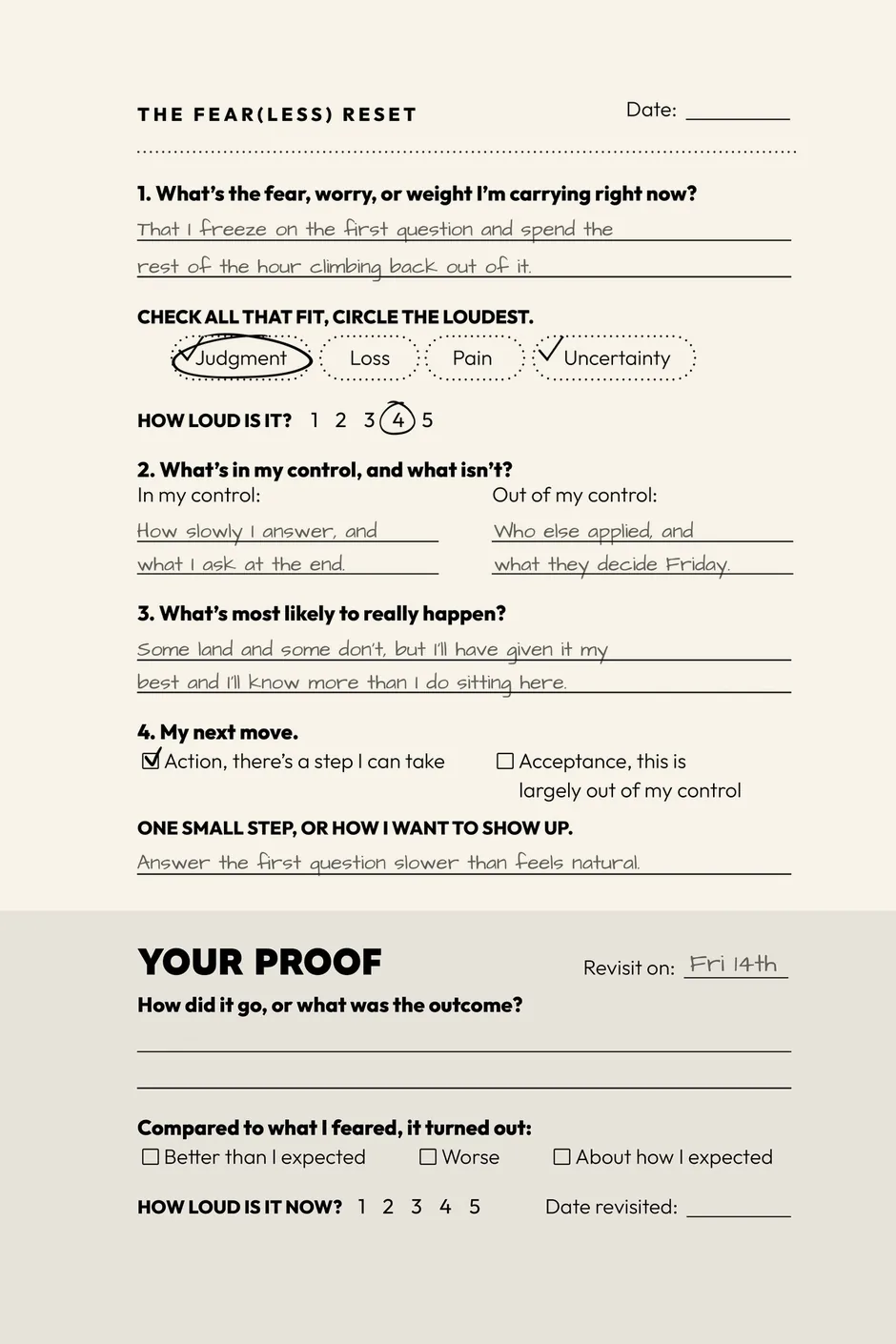
Most likely to really happen
Fear is very good at filling in the blanks with the worst version, so take a second here and write what you honestly think is going to happen.
My next move
Check action if there's a step you can take, or acceptance if this is largely out of your control. Choosing acceptance is not quitting.
Your Proof
Before you close the page, pick a date to come back. When that day comes, write down what actually happened. That box is where the whole thing pays off.
Some fears need a minute. Some need more.
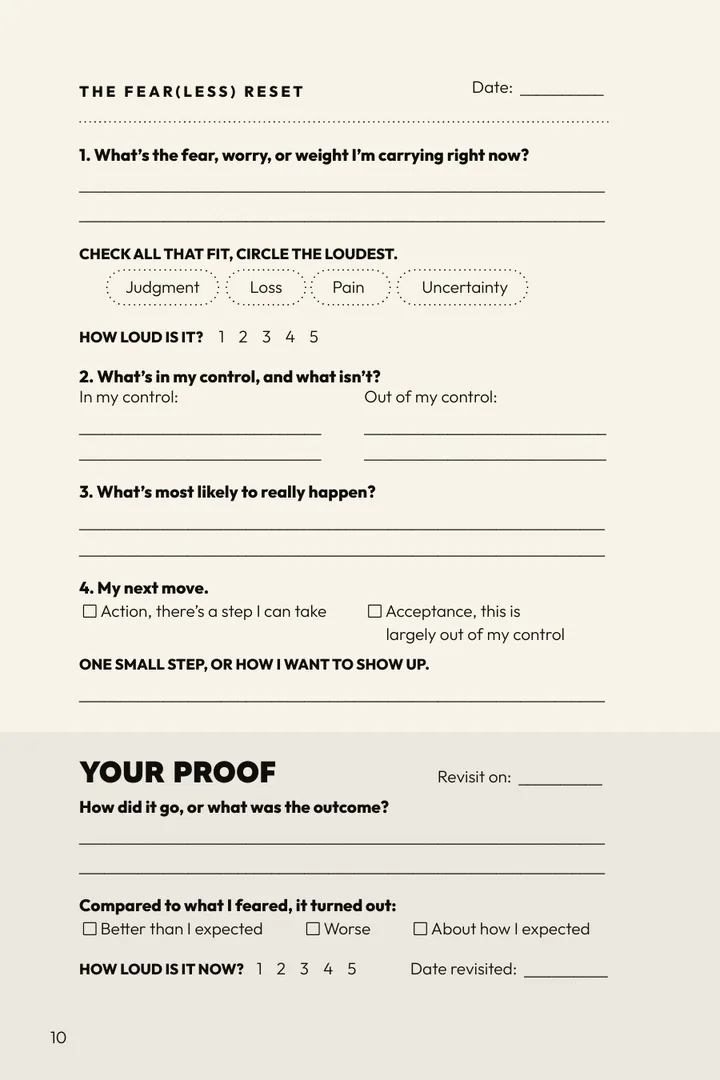
The Fear(less) Reset
This one is for the quick moment, right before you walk into the room or while you're still sitting in the car.
- 40 Reset pages in the journal
- Short enough to finish before you walk in
- Ends with Your Proof, so you come back to it
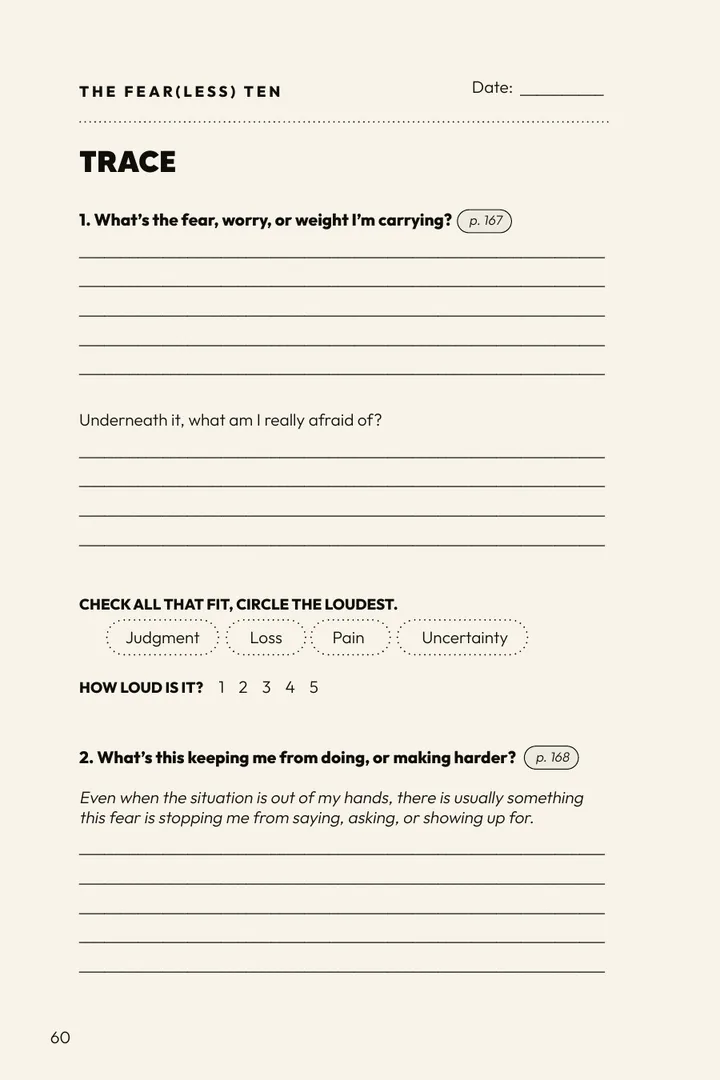
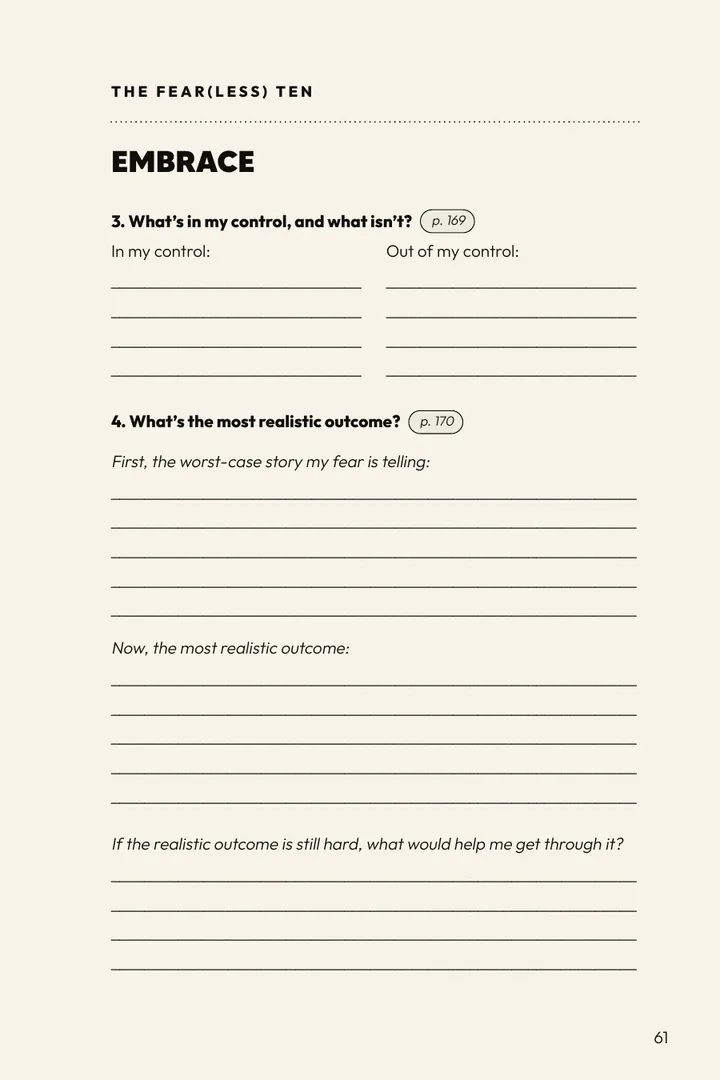
The Fear(less) Ten
This one is for the heavy thing, the one you keep circling back to, the kind that needs more time and more room than a reset can give it.
- 24 Tens in the journal, four pages each
- Built on Trace, Embrace and Grace
- A guide in the back explains every question
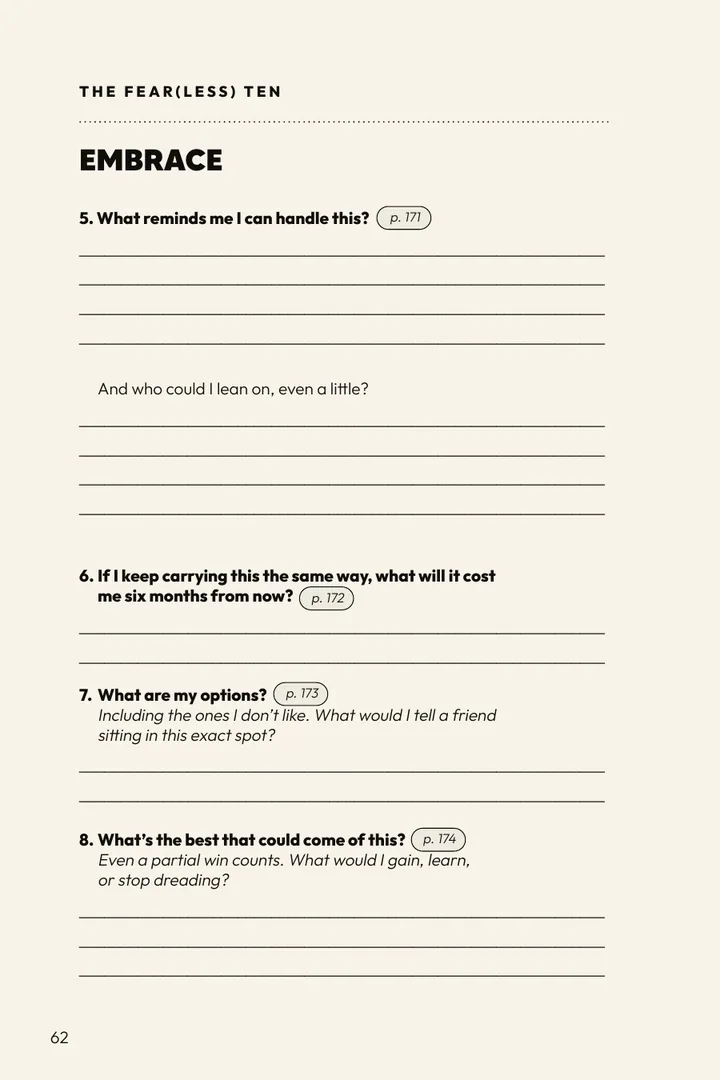
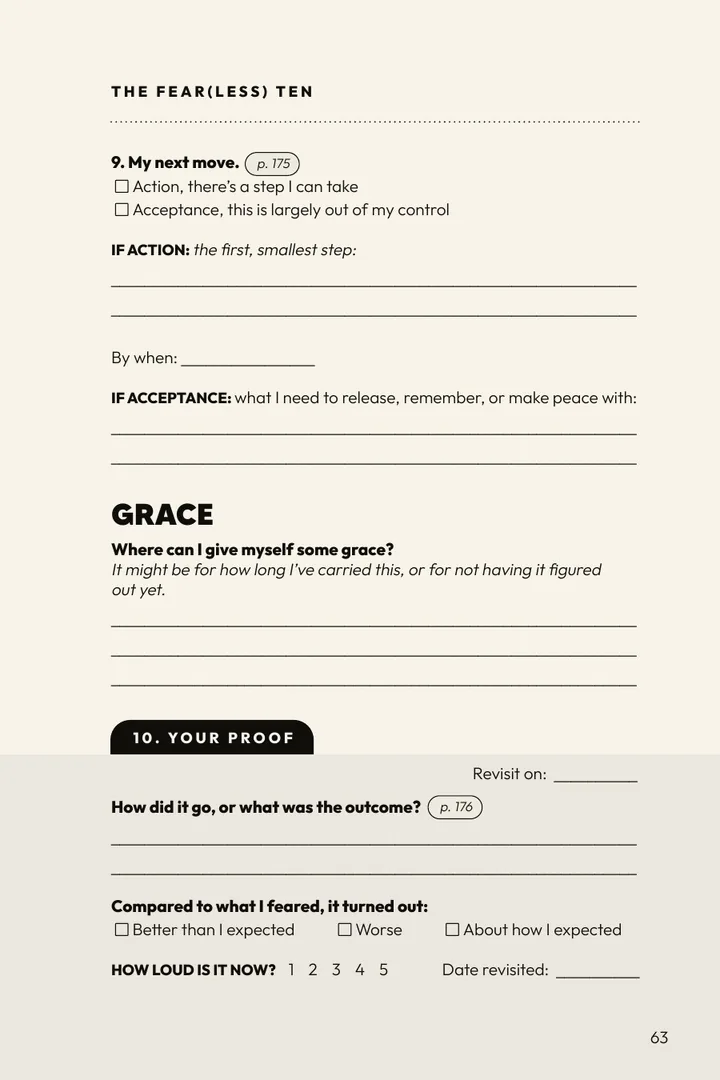
Two ribbon marks hold your place. One says TEN and one says RESET, so you can open straight to the kind of page you need.
Writing it down is only half of it
Both kinds of entry end the same way, with a box called Your Proof. Before you close the page, pick a date to come back. When that day comes, write down what actually happened and mark it against what you feared.
You'll also hit a look back page after every ten resets and after every six Fear(less) Tens. It walks you through the ones you just finished, so you can see your patterns from outside any single page.
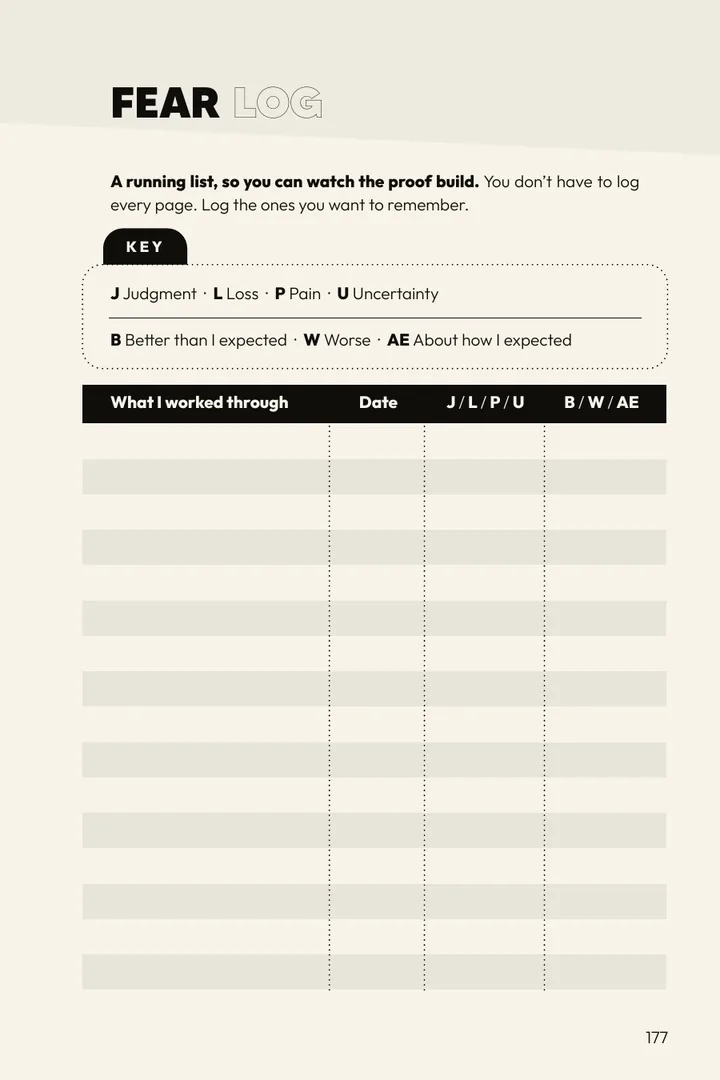
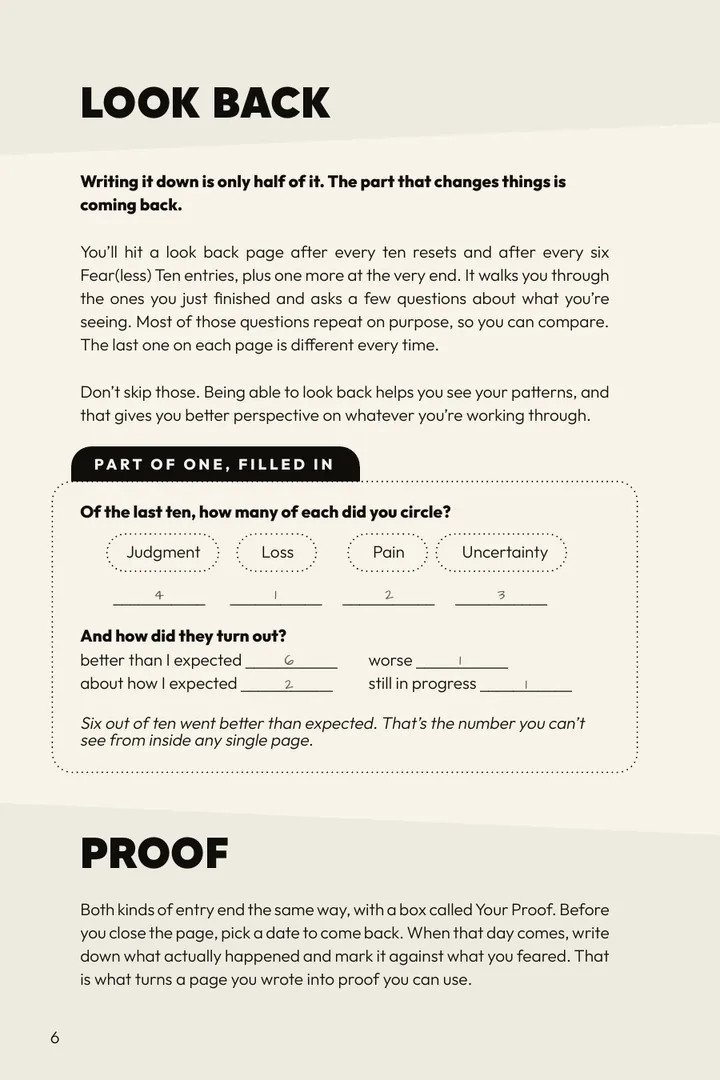
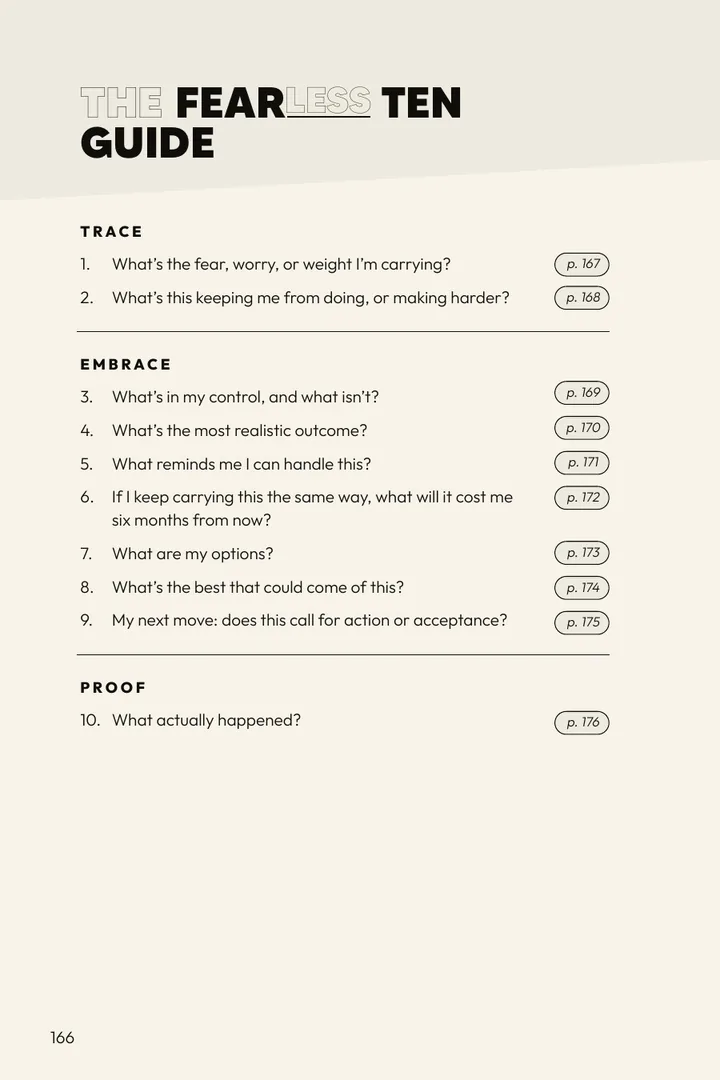
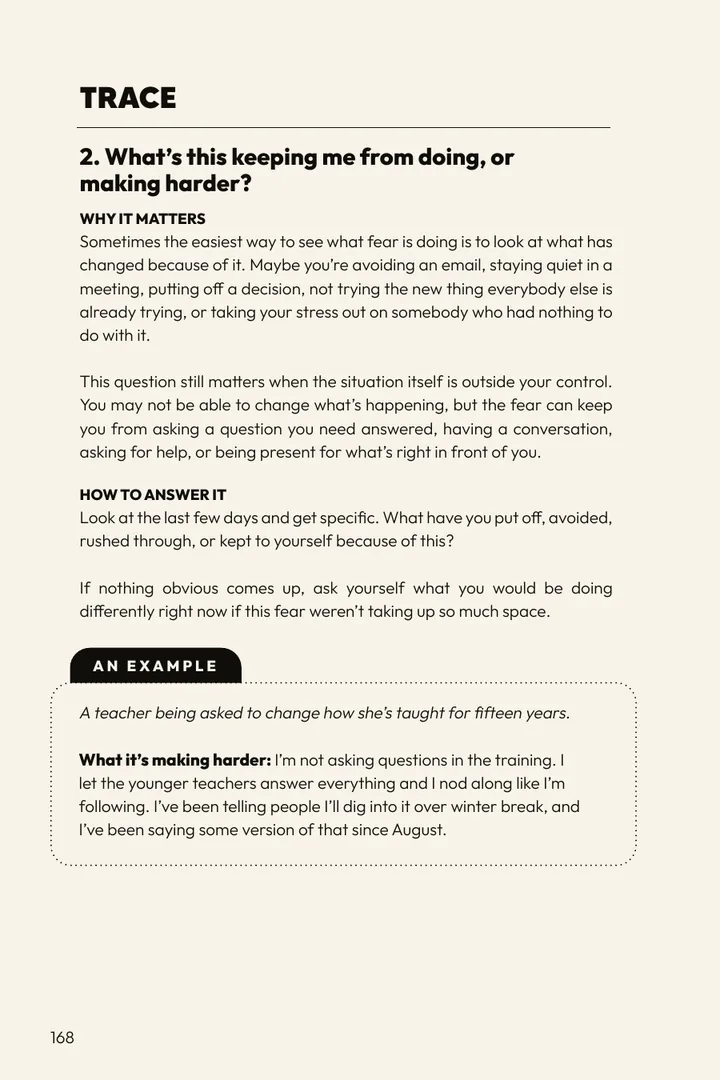
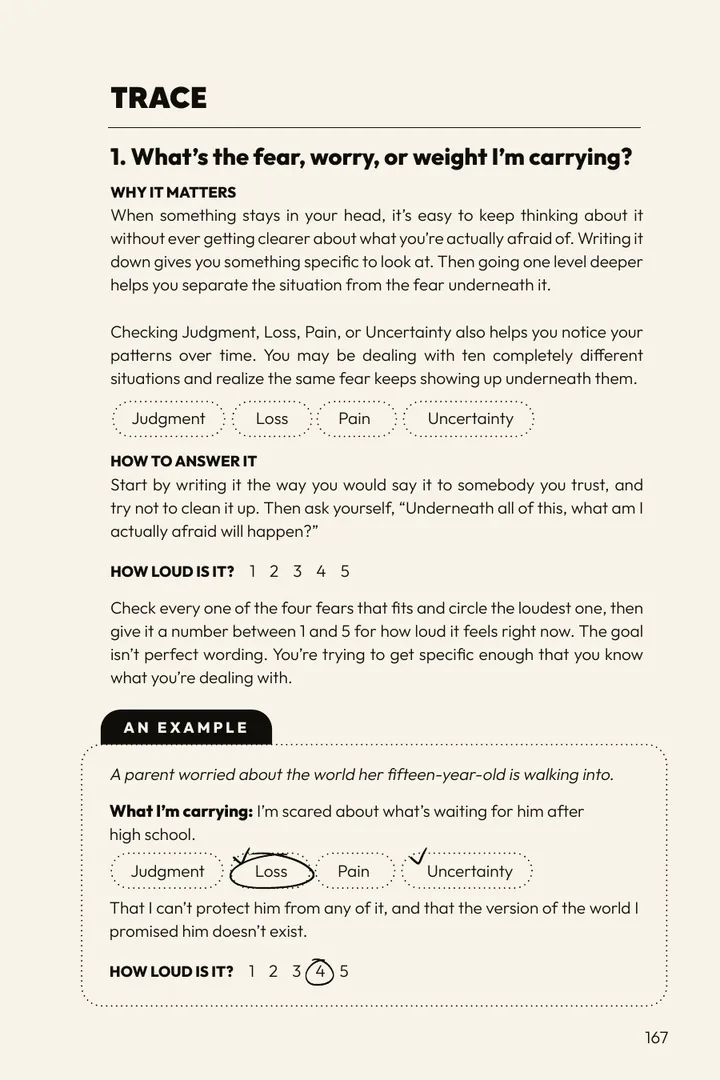
Real pages from the guide
Stuck on a question? There's a page for it.
Every question in the Fear(less) Ten has a page in the back that explains the purpose of the question and helps you answer it. The small number beside each question sends you straight to its page.
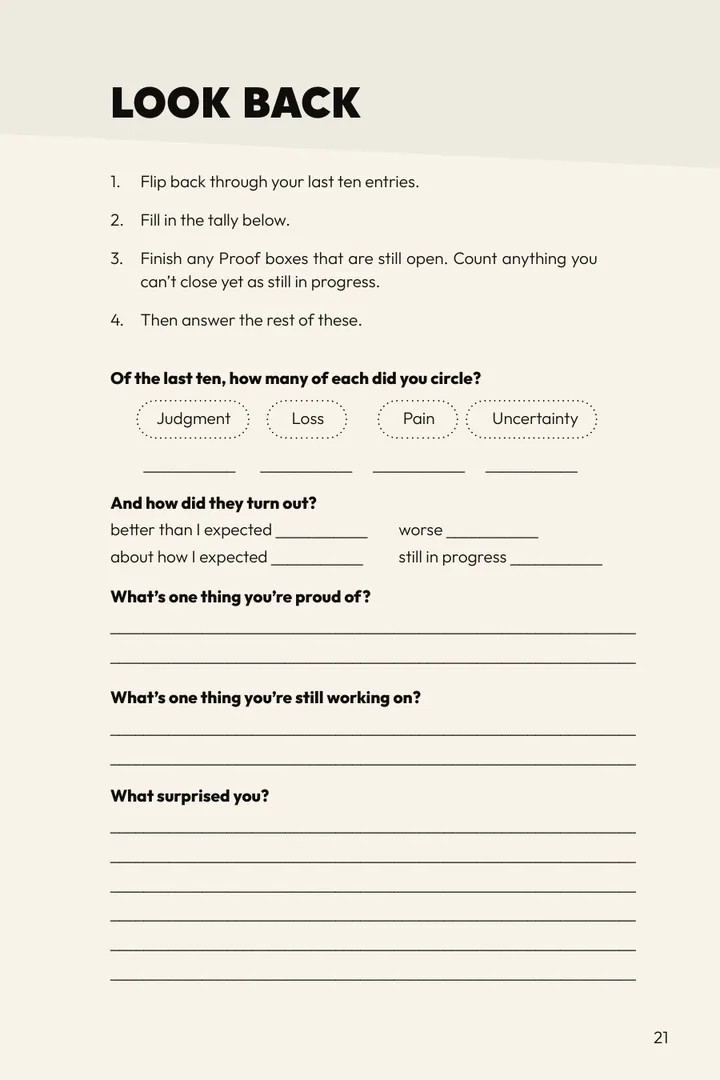
Look back pages
You'll hit one after every ten resets and after every six Fear(less) Ten entries, so you can see your patterns.
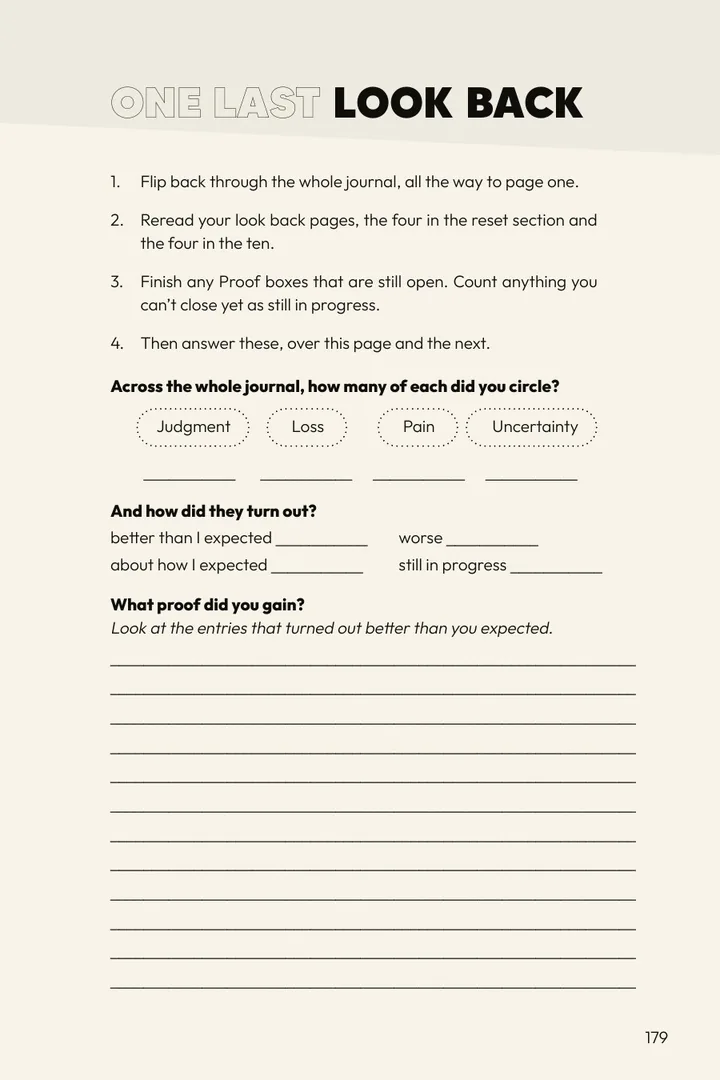
One last look back
At the very end you flip back through the whole journal and answer a few last questions, starting with what proof you gained.
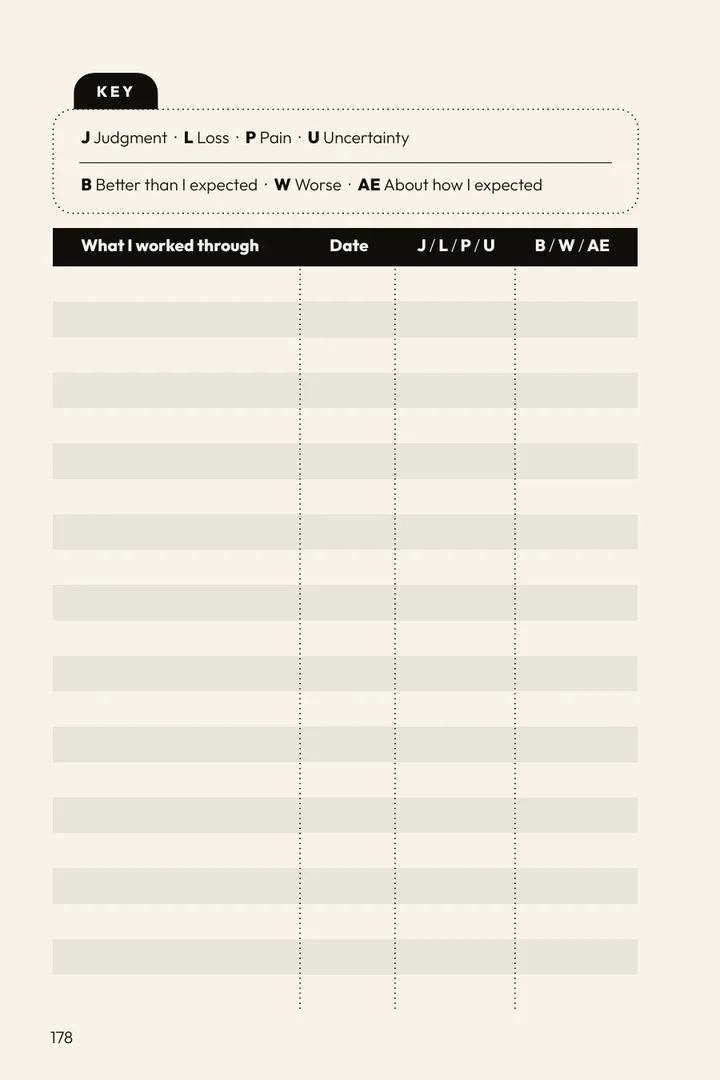
Fear log
A running list, so you can watch the proof build. Log the ones you want to remember.
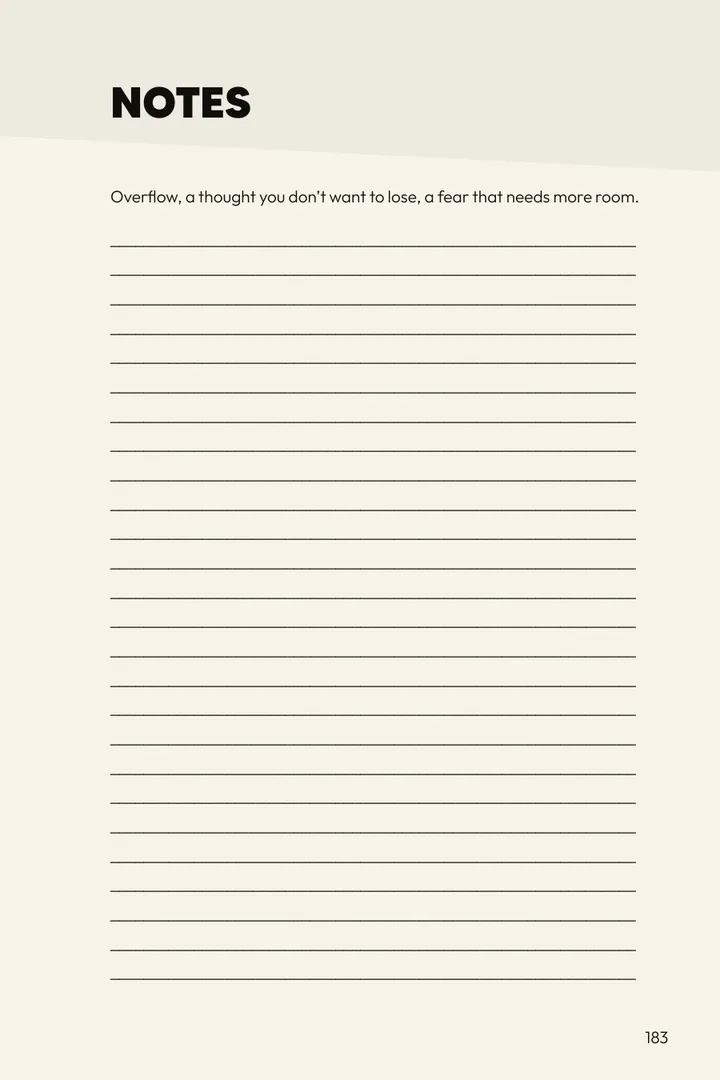
Notes
Overflow, a thought you don't want to lose, a fear that needs more room.
A few lines to hold onto
Quote pages show up along the way, for the days you open the journal and don't know where to start.





Me and a few of the 75,000
You're in the right place
For years I've asked people some version of one question. What do you fear? After collecting more than seventy-five thousand fears across five generations, I've realized how much we carry that we never say out loud.
People come up to me and tell me that was the first time they had ever written their fear down. I get it, because I don't always love documenting how I feel either. But getting something out of my head and onto a page helps me process it, figure out what I can actually act on, and come back later to see what really happened.